There is a particular quiet that settles over a mountain refuge in the evening. Boots line the entrance, jackets hang to dry, and walkers who met on the trail share a long table. Walking from hut to hut lets you cross a range over several days while carrying only a modest pack. The key is knowing what the huts provide, and what they do not.
Hut-to-hut walking is popular across many mountain regions, from the Alps and the Pyrenees to the Dolomites and Scandinavian fells. Facilities vary widely, from staffed lodges with hot meals to simple unstaffed shelters. Always check the details for each hut on your route with the hut or the local alpine club before you go, along with the forecast and route conditions.
Know what the huts offer
Your pack depends almost entirely on the huts you plan to use. Before you write a single list, find out for each night:
- Meals: whether dinner and breakfast are served, or whether you need to bring food and a stove.
- Bedding: whether blankets or duvets are provided, and whether a sleeping-bag liner is required.
- Water: whether there is drinking water, or whether you will need to treat or carry it.
- Payment: whether the hut accepts cards or only cash, as many remote huts have no signal.
- Booking: whether a reservation is needed, especially in summer.
For staffed huts that serve meals and provide blankets, your pack can be surprisingly light. For self-catering shelters, it grows quickly. Plan for the hut with the fewest facilities on your route.
On a hut route, the mountain sets the itinerary. The pack’s job is simply to let you follow it gently.
The walking layers
Days on a hut route usually involve steady climbing, exposed passes and long descents. A thin layering system serves you best.
- Two quick-drying base layer tops, one to walk in and one to change into.
- A light fleece or wool mid-layer.
- A packable insulated jacket for passes, breaks and evenings.
- A waterproof jacket and, depending on the route, waterproof trousers.
- Walking trousers or shorts, plus a hat, sun hat, thin gloves and sunglasses.
- Well-fitting, broken-in walking boots or shoes suited to the terrain.
The hut kit
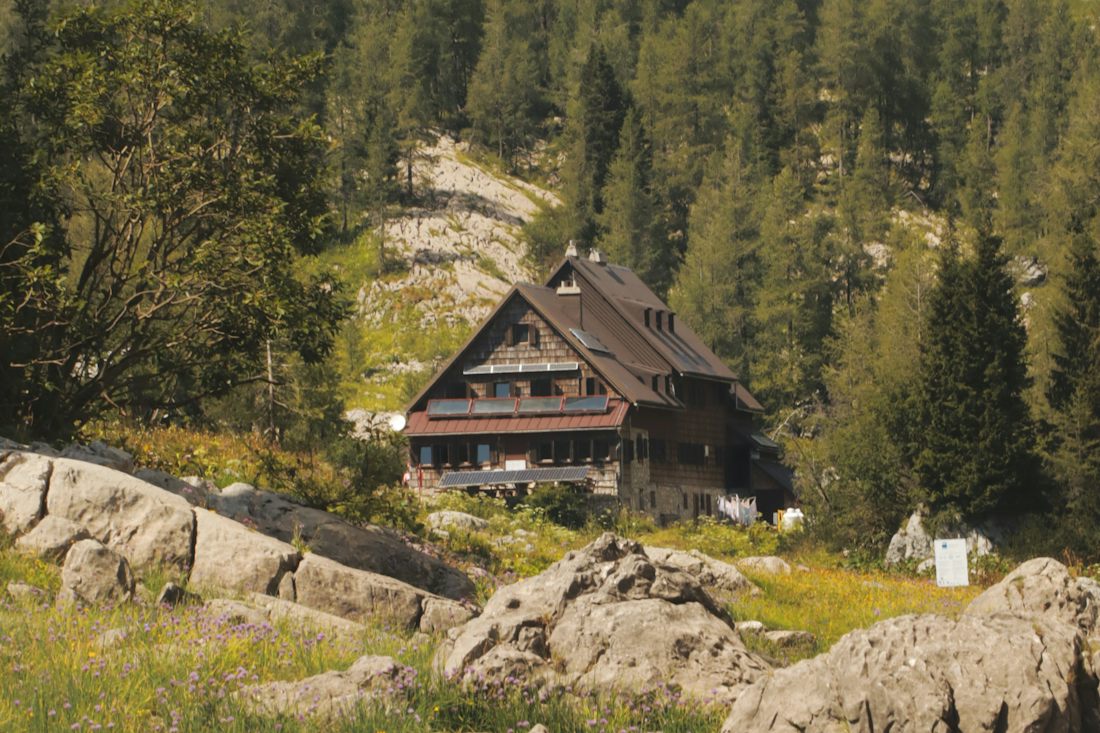
This is the small bundle that makes evenings in a refuge comfortable. Keep it together in one light bag so you can lift it out on arrival.
For sleeping
- A sleeping-bag liner, which many huts ask for in shared dormitories.
- Earplugs and an eye mask; dormitories can be lively before dawn.
- A small head torch for finding your bunk and the path to the washroom.
For the evening
- A light change of clothes to wear indoors while walking clothes air out.
- Lightweight hut shoes or socks, if the hut does not provide slippers. Many huts ask walkers to leave boots at the entrance.
- A quick-drying towel and a small wash kit.
For practical things
- Cash in small notes, plus any membership card for an alpine club if you have one.
- A paper map and compass, and the knowledge to use them, alongside any phone navigation.
- A small first-aid kit, blister care and personal medication.
- Sun cream, lip balm and a refillable water bottle or two.
A note on weight: on a multi-day hut walk you carry everything every day. Pack your bag fully at home, then walk a hilly route with it. If it feels heavy now, it will feel heavier on the third pass.
Things that are easy to forget
- A small bag for your own rubbish, since many huts ask walkers to carry waste out.
- A spare pair of walking socks for each two or three days.
- A plastic or dry bag lining for your pack, to keep spare clothes and the sleeping-bag liner dry.
- A written note of each hut’s name, phone number and your booking details.
The evening ritual
Arriving at a hut is a lovely moment, and a small routine helps you settle. Change out of damp layers first, hang them to air, and set out your hut kit on your bunk. Refill water, check tomorrow’s route and weather, and pack the bag for the morning before dinner. Then the rest of the evening is yours: a warm meal, a view of the peaks turning pink, and an early night.
The takeaway
A hut-to-hut route rewards a pack that is light, organised and matched to what each refuge provides. Check meals, bedding, water and payment for every hut. Pack a thin layering system, a compact hut kit and a few easily forgotten essentials, then rehearse with the full bag at home. On the trail, you are free to notice the mountains rather than your load.