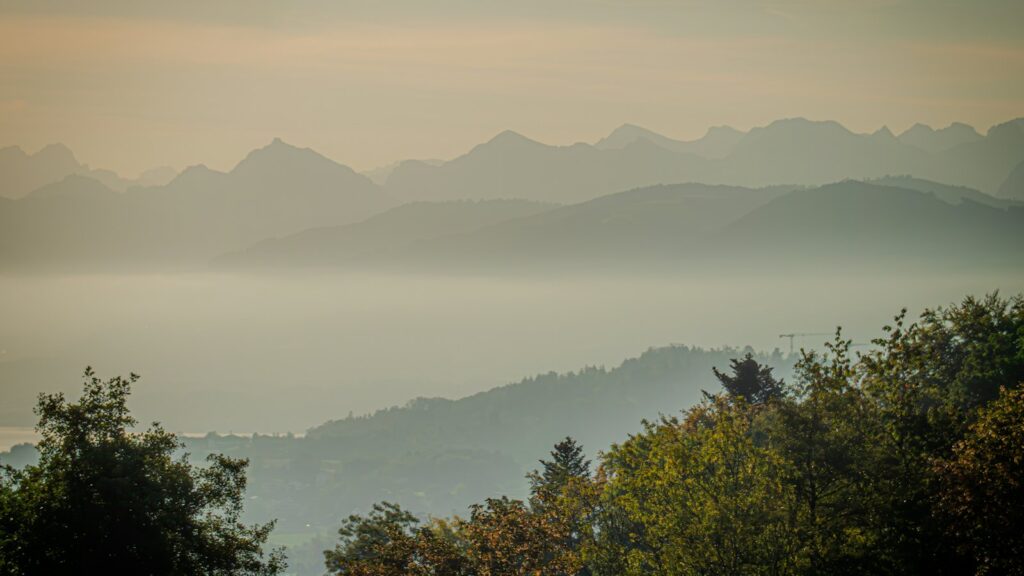
Mountain mornings are some of the most beautiful hours of any trip: cold air, mist lifting from the valley, the first light on the ridge. They are also the hours when layering goes wrong most often. By noon the same path can feel warm and bright, and the jacket that felt essential at dawn becomes a weight.
Layering for mountain days is less about owning special clothing and more about avoiding a few common habits. Here are the mistakes that most often make a mountain morning uncomfortable, and the calm adjustments that help. Mountain weather changes quickly, so always check the local forecast and any guidance from local services before setting out.
Mistake 1: dressing for the first five minutes
It is natural to pull on everything you own when you step outside into a chilly dawn. But within ten minutes of walking uphill, your body warms and those layers trap heat and moisture. You then stop to undress on a narrow path, or keep going and get damp from the inside.
Instead: start slightly cool. If you feel a little chilly standing at the trailhead, you are probably dressed about right for walking. Keep your warm layer at the top of your bag for the first pause.
Mistake 2: cotton next to the skin
Cotton is comfortable at home, but it holds moisture and dries slowly. On a cool morning climb, a damp cotton top can leave you feeling cold as soon as you stop.
Instead: choose a base layer that dries more quickly, such as merino wool or a synthetic fabric. It does not need to be technical or expensive, just something that does not stay wet against your skin.
Start a little cool, stop a little early, and change before you are uncomfortable rather than after.
Mistake 3: one thick layer instead of several thin ones
A single heavy jumper gives you two options: on or off. Mountain mornings need more choices than that.
- Base layer: a light top that manages moisture.
- Mid-layer: a thin fleece or wool layer for warmth.
- Warm layer: a packable insulated jacket for stops, summits and evenings.
- Shell: a wind- and rain-resistant jacket that goes over everything.
With four thin pieces, you can find the right combination for each part of the day, and each one packs small.
Mistake 4: forgetting hands, head and neck
Many people layer their body carefully and forget the small pieces that make the biggest difference. A light hat, thin gloves and a neck tube weigh very little and adjust your warmth quickly without stopping to change a jacket.
Instead: keep them in a hip pocket or the lid of your bag. Put them on at the first sign of a cold breeze, take them off as the sun comes over the ridge.
Mistake 5: no plan for the descent
Walking down uses less effort than climbing, so you generate less heat. Combined with afternoon cloud or a cool wind in the shade of the valley, the descent can feel colder than the climb.
Instead: put a layer back on before you start down, not halfway. Have a dry spare top if the morning climb was a sweaty one.
Mistake 6: packing layers where you cannot reach them
The perfect layer is no help if it is buried under lunch and a water bottle. When reaching for a jacket means unpacking, most people put it off until they are already cold.
- Pack the shell and warm layer last, at the top of the bag.
- Keep hat, gloves and a snack in an easy pocket.
- Put heavier items lower, closer to your back.
A quiet check at every pause: before you sit down, ask “Am I about to get cold?” If the answer is yes, add a layer first. It is easier to stay warm than to warm up again.
Mistake 7: treating the forecast as a promise
A sunny forecast for the valley may not describe conditions higher up, where it is often cooler and windier. Bring the shell and warm layer even on bright days. They are the pieces you hope not to need, and the ones you will be most glad of if the weather turns.
The takeaway
Mountain mornings ask for flexibility, not bulk. Start a little cool, avoid cotton against the skin, use several thin layers instead of one thick one, and keep hats, gloves and your warm layer within reach. Put a layer back on before the descent, and treat the forecast as a guide. The mountains then become a place to notice the light, not the cold.